Preventing Cuts & Lacerations in Restaurants
Restaurant Safety Calendar™
Every restaurant employee handles sharp objects throughout the day.
Chef's knives, paring knives, serrated knives, box cutters, food slicers, broken glass, can lids, and metal equipment are all part of normal restaurant operations. Whether preparing vegetables, opening deliveries, slicing bread, or cleaning the kitchen after closing, employees may handle sharp tools dozens—if not hundreds—of times during a single shift.
Because these tasks become so routine, it's easy to forget how quickly an ordinary job can become a serious injury.
According to the National Institute for Occupational Safety and Health (NIOSH), lacerations are among the most common injuries experienced by food service workers. While many cuts are minor, deeper injuries can require stitches, medical treatment, lost work time, and temporary job restrictions. Even a relatively small injury can affect productivity, scheduling, and employee confidence.
The good news is that most cuts and lacerations are preventable.
Building a strong safety culture begins with understanding where these injuries occur and developing habits that help employees work safely every day.
Why Cuts & Lacerations Matter
Most restaurant employees have experienced a small cut at some point in their careers.
Because minor cuts happen so frequently, it's easy to underestimate the risks associated with sharp tools.
Unfortunately, serious lacerations can occur in only a fraction of a second.
Beyond the immediate pain, cuts often interrupt food preparation, require first aid, contaminate food, and sometimes force employees to leave work unexpectedly. More severe injuries may require stitches, surgery, or extended recovery time.
Preventing cuts isn't simply about avoiding injuries.
It's about keeping employees healthy, maintaining food safety, reducing operational disruptions, and ensuring everyone goes home with the same number of fingers they arrived with.
Understanding Where Most Cuts Occur
Restaurant cuts rarely happen because employees intentionally ignore safety.
More often, they occur during everyday tasks performed hundreds of times before.
Common situations include:
- Cutting food too quickly.
- Using dull knives that require extra force.
- Attempting to catch a falling knife.
- Washing knives in soapy water where blades cannot be seen.
- Reaching into sinks containing sharp utensils.
- Using the wrong knife for the task.
- Opening boxes with improper tools.
- Handling broken glass incorrectly.
Most injuries happen during routine work—not unusual situations.
That's why building safe habits matters so much.
Restaurants Are Full of Sharp Hazards
Restaurants are unique workplaces because nearly every area contains potential cutting hazards.
The kitchen obviously contains knives and slicers, but hazards also exist in storage rooms, dishwashing stations, bars, prep areas, and receiving docks.
Broken dishes, aluminum foil boxes, metal food cans, and packaging materials can all create unexpected hazards.
Employees who remain aware of their surroundings are far more likely to recognize these risks before someone gets hurt.
Preventing Cuts & Lacerations Is About Building Good Habits
Fortunately, preventing most cuts doesn't require complicated equipment.
It begins with consistent habits practiced by every employee.
The safest restaurants develop routines that include:
- Using the correct knife for the job.
- Keeping blades sharp and well maintained.
- Cutting on stable cutting boards.
- Carrying knives safely.
- Storing knives properly.
- Wearing cut-resistant gloves when appropriate.
- Never attempting to catch a falling knife.
- Handling broken glass safely.
- Reporting damaged equipment immediately.
Each habit takes only a few seconds.
Together, they dramatically reduce the likelihood of injuries.
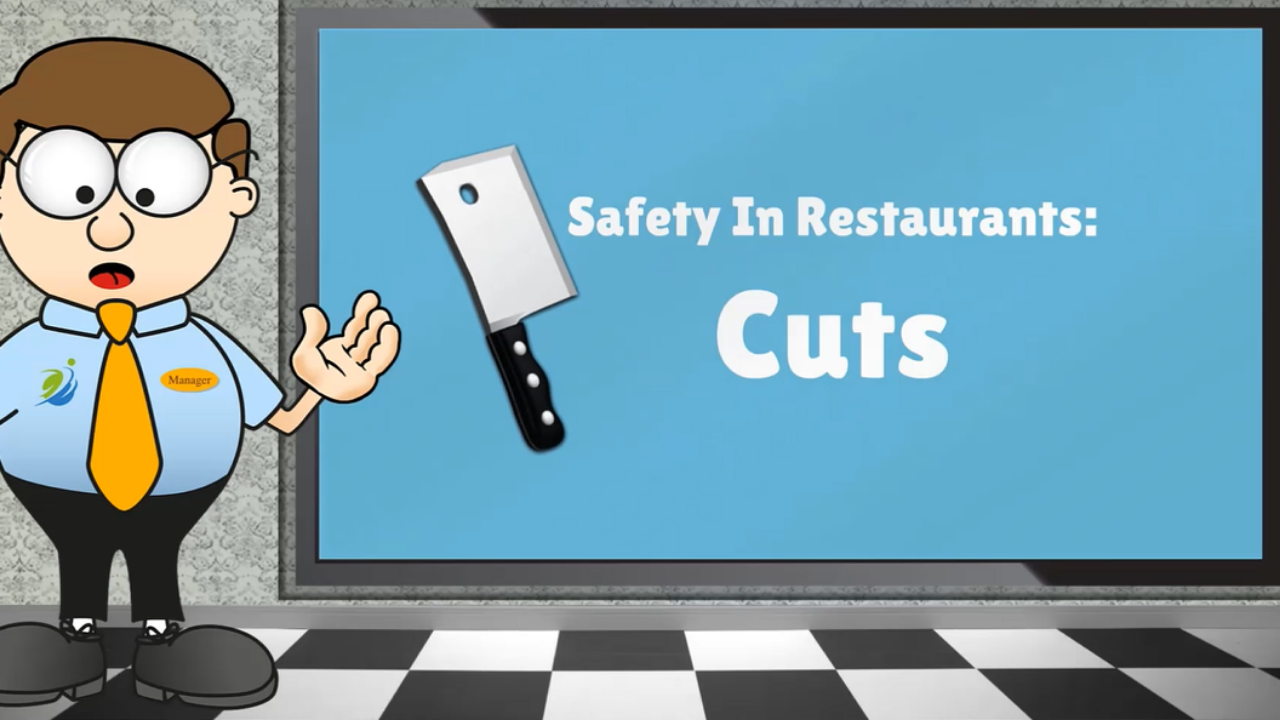
The free training video below explains each of these safe work practices in greater detail and demonstrates how they apply during everyday restaurant operations.
Every Employee Has a Responsibility
Knife safety isn't only the responsibility of chefs or kitchen managers.
Every employee who handles food, cleans equipment, unloads deliveries, washes dishes, or works around sharp tools plays an important role in preventing injuries.
Employees should report damaged knives, unsafe equipment, broken glass, and hazardous work practices as soon as they are discovered.
Safety improves when everyone looks out for one another.
Building Safety Into Everyday Operations
Restaurants that consistently experience fewer injuries rarely achieve those results through luck.
They achieve them because safety has become part of the way they operate every day.
The challenge is that most restaurant owners and managers already have more responsibilities than hours in the day. Hiring, scheduling, inventory, customer service, food quality, staffing shortages, equipment problems, and countless other priorities compete for their attention. Even managers who genuinely care about safety often struggle to keep training consistent, document completion, provide refresher training, and maintain compliance throughout the year.
That's exactly why the REST Compliance Protection System™ was created.
Instead of asking managers to build a complete safety program from scratch, REST provides a structured system that helps keep safety active throughout the year. It delivers ongoing employee training, quizzes, completion certificates, documentation, manager resources, compliance tools, downloadable safety materials, and the Restaurant Safety Calendar™—an annual safety reinforcement program that introduces one important restaurant safety topic every four weeks, helping managers keep training fresh and safety conversations active throughout the year.
Over time, those daily actions become habits.
Those habits become culture.
And culture is what keeps employees safe—not just today, but throughout the life of the restaurant.
Watch the Free Training Video
Knowing that cuts are preventable is only the first step.
Our free Preventing Cuts & Lacerations in Restaurants training video demonstrates practical knife safety techniques, proper handling procedures, and simple habits employees can use every day to reduce the risk of injury.
➡️ Watch the Free Cuts & Lacerations Training Video
Download the Free Safety Posters
Training lasts a few minutes.
Visual reminders reinforce safe habits every day.
Download our free knife safety posters to display in prep areas, kitchens, dish rooms, and employee break rooms to help keep safe work practices fresh in everyone's mind.
➡️ Download the Free Cuts & Lacerations Safety Posters
Training Is Only the Beginning of Building a Safety Culture
Watching a training video is an excellent first step.
Displaying safety posters helps reinforce those lessons.
But building a safer restaurant requires more than a single training session.
The REST Compliance Protection System™ brings everything together in one organized platform. It includes employee safety training, quizzes, certificates, training documentation, manager resources, compliance tools, downloadable safety materials, and the Restaurant Safety Calendar™—an annual safety reinforcement program that introduces one important restaurant safety topic every four weeks, helping managers keep training fresh and safety conversations active throughout the year.
Instead of wondering who has completed training, where records are stored, or when refresher training is due, REST provides a simple, organized system that makes restaurant safety easier to manage.
Because training is important.
But creating a lasting culture of safety is what truly protects your employees—and your business.
Get instant access to the REST Compliance Protection System™
Trusted by restaurant owners and franchise operators to document safety training and reduce compliance risk.
No contracts • Cancel anytime • Setup in minutes • No IT required.
Have Questions About REST? Let’s Talk Safety.
Whether you’re training 5 employees or 500, we’re here to help you protect your team, document compliance, and save on long-term costs. Fill out the form and we’ll be in touch ASAP.
By submitting this form, you agree to receive safety-related emails from Restaurant Employee Safety Training.
We respect your time and will only contact you with helpful information—no spam, ever.