Bloodborne Pathogen Safety in Restaurants
Restaurant Safety Calendar™
Most restaurant employees will never experience a serious blood exposure incident during their careers.
But when one does occur, employees need to know exactly how to respond.
A guest may cut a finger on broken glass. An employee may suffer a knife injury while preparing food. Someone may fall and begin bleeding in the dining room or parking lot. These situations are uncommon, but they require calm, informed action to protect everyone involved.
Fortunately, responding safely doesn't require medical training.
Building a strong safety culture begins with understanding what bloodborne pathogens are, knowing how to avoid unnecessary exposure, and following established procedures whenever blood or other potentially infectious materials are present.
Why Bloodborne Pathogen Safety Matters
Bloodborne pathogens are microorganisms that can be present in human blood and certain other bodily fluids.
While the risk of exposure in most restaurants is relatively low, employees should never assume that blood is harmless simply because the injury appears minor.
Proper response procedures help protect injured individuals, coworkers, and anyone responsible for cleaning the affected area.
More importantly, they help prevent unnecessary exposure while ensuring incidents are handled professionally and safely.
Understanding Bloodborne Pathogens
Bloodborne pathogens are disease-causing microorganisms that may be transmitted through contact with infected human blood or certain other potentially infectious materials.
Examples include viruses such as:
- Hepatitis B (HBV)
- Hepatitis C (HCV)
- Human Immunodeficiency Virus (HIV)
Restaurant employees are not expected to diagnose illnesses or determine whether blood contains pathogens.
Instead, the safest approach is called Universal Precautions—treating all human blood as if it could contain infectious materials and responding appropriately every time.
Blood Exposure Can Happen Anywhere
Although restaurants aren't healthcare facilities, blood exposure incidents can still occur.
Common situations include:
- Knife cuts during food preparation
- Broken glass injuries
- Employee falls
- Guest injuries
- Minor first-aid situations
These events are uncommon, but every employee should know the restaurant's procedures before one occurs.
Preparation creates confidence.
Bloodborne Pathogen Safety Is About Building Good Habits
Responding safely begins with consistent habits practiced by every employee.
The safest restaurants develop routines that include:
- Wearing disposable gloves before assisting with blood cleanup.
- Treating all blood as potentially infectious.
- Using approved cleaning and disinfecting procedures.
- Disposing of contaminated materials properly.
- Washing hands thoroughly after glove removal.
- Reporting exposure incidents immediately.
- Replacing first-aid supplies when used.
- Following company exposure procedures every time.
Each habit helps reduce unnecessary exposure while protecting both employees and guests.
The free training video below explains these procedures in greater detail and demonstrates how they apply during everyday restaurant operations.
Every Employee Has a Responsibility
Bloodborne pathogen safety isn't only the manager's responsibility.
Every employee should understand basic exposure precautions, know where protective equipment is located, report injuries promptly, and follow established cleanup procedures whenever blood or other potentially infectious materials are present.
The safest restaurants prepare before an incident occurs.
Building Safety Into Everyday Operations
Restaurants that consistently protect employees during unexpected incidents rarely achieve those results through luck.
They achieve them because safety has become part of the way they operate every day.
The challenge is that most restaurant owners and managers already have more responsibilities than hours in the day. Hiring, scheduling, inventory, customer service, food quality, staffing shortages, equipment problems, and countless other priorities compete for their attention. Even managers who genuinely care about safety often struggle to keep training consistent, document completion, provide refresher training, and maintain compliance throughout the year.
That's exactly why the REST Compliance Protection System™ was created.
Instead of asking managers to build a complete safety program from scratch, REST provides a structured system that helps keep safety active throughout the year. It delivers ongoing employee training, quizzes, completion certificates, documentation, manager resources, compliance tools, downloadable safety materials, and the Restaurant Safety Calendar™—an annual safety reinforcement program that introduces one important restaurant safety topic every four weeks, helping managers keep training fresh and safety conversations active throughout the year.
Over time, those daily actions become habits.
Those habits become culture.
And culture is what helps employees respond safely and confidently—even during situations they may encounter only once in a career.
Watch the Free Training Video
Understanding bloodborne pathogen safety is only the beginning.
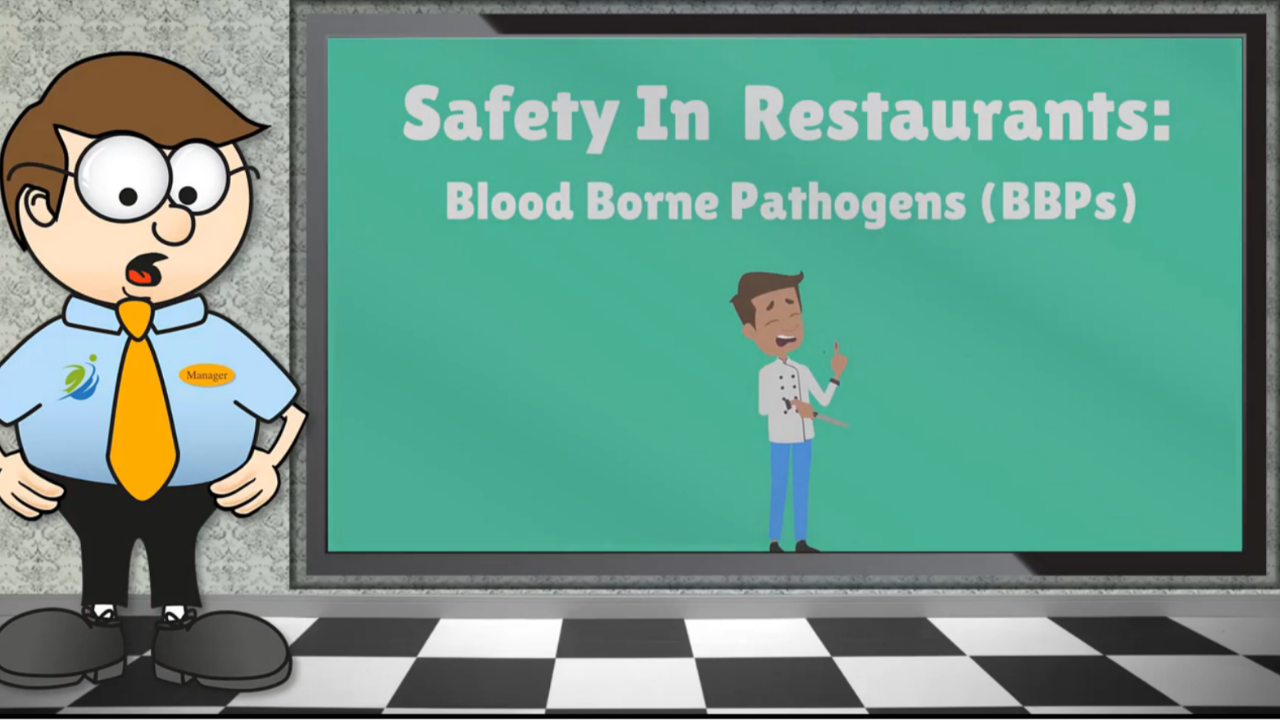
Our free Bloodborne Pathogen Safety in Restaurants training video explains Universal Precautions, safe cleanup procedures, proper use of personal protective equipment, and practical steps employees should follow whenever blood exposure occurs.
➡️ Watch the Free Restaurant Bloodborne Pathogen Safety Training Video
Download the Free Safety Posters
Training lasts a few minutes.
Visual reminders reinforce safe habits every day.
Download our free bloodborne pathogen safety posters to remind employees about Universal Precautions, glove use, proper cleanup procedures, and safe response practices.
➡️ Download the Free Restaurant Bloodborne Pathogen Safety Posters
Training Is Only the Beginning of Building a Safety Culture
Watching a training video is an excellent first step.
Displaying safety posters helps reinforce those lessons.
But building a safer restaurant requires more than a single training session.
The REST Compliance Protection System™ brings everything together in one organized platform. It includes employee safety training, quizzes, completion certificates, training documentation, manager resources, compliance tools, downloadable safety materials, and the Restaurant Safety Calendar™—an annual safety reinforcement program that introduces one important restaurant safety topic every four weeks, helping managers keep training fresh and safety conversations active throughout the year.
Instead of wondering who has completed training, where records are stored, or when refresher training is due, REST provides a simple, organized system that makes restaurant safety easier to manage.
Because training is important.
But creating a lasting culture of safety is what truly protects your employees—and your business.
Get instant access to the REST Compliance Protection System™
Trusted by restaurant owners and franchise operators to document safety training and reduce compliance risk.
No contracts • Cancel anytime • Setup in minutes • No IT required.
Have Questions About REST? Let’s Talk Safety.
Whether you’re training 5 employees or 500, we’re here to help you protect your team, document compliance, and save on long-term costs. Fill out the form and we’ll be in touch ASAP.
By submitting this form, you agree to receive safety-related emails from Restaurant Employee Safety Training.
We respect your time and will only contact you with helpful information—no spam, ever.